Building Artificial Roofing vs Traditional Products in the Midwest
Anyone that has spent a few years seeing roofs age in the Midwest finds out promptly that this area is unrelenting. A roof covering right here does not face one environment. It encounters every one of them. January can bring ice dams, wind cool, and hefty snow resting on the eaves for days. April commonly provides freeze-thaw swings and difficult rain. Summer cooks dark surfaces under strong UV exposure, then rolls in hail storm and straight-line winds. Autumn drops leaves right into valleys and gutters, trapping dampness where weak materials start to fail.
That climate fact is the real background for the discussion around building synthetic roof versus traditional materials. Homeowners are no more picking only on appearance or preliminary rate. They are considering weight, climate performance, upkeep cycles, installation complexity, and exactly how well a roofing system will certainly still take care of ten or twenty Chicago-area winter seasons. In higher-end neighborhoods, that discussion gets even extra particular. Individuals desire the aesthetic richness of slate, cedar shake, or ceramic tile, but they additionally want a system that does not penalize them with consistent upkeep.
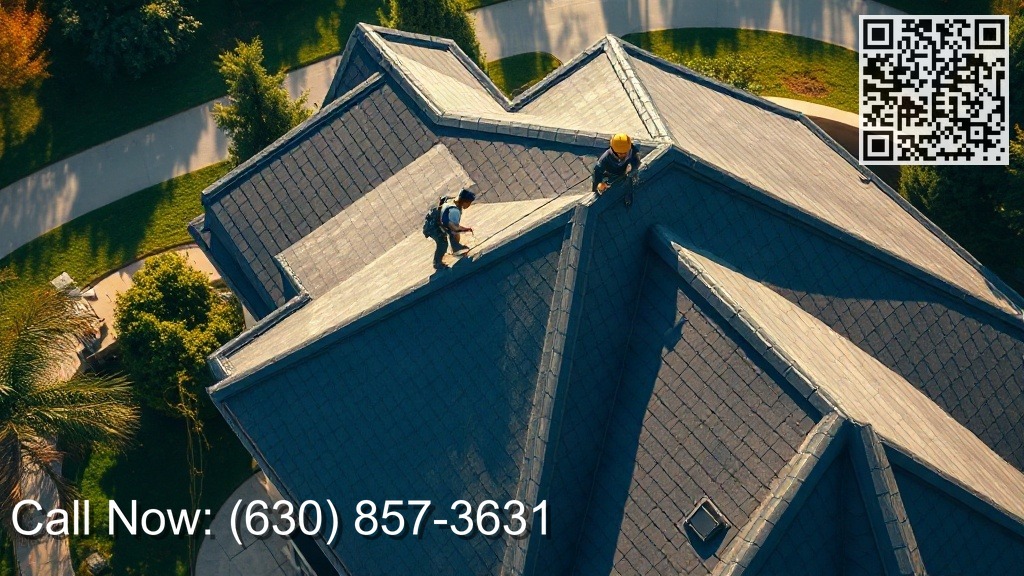
The increase of costs synthetic roof is not a craze. It is an action to sensible troubles that conventional roof covering products have always had, particularly in the Midwest.
What "building artificial roofing" actually means
The term obtains used loosely, so it aids to specify it. Building synthetic roofing typically refers to engineered roof items designed to reproduce the appearance of natural slate, cedar shake, or clay ceramic tile while improving influence resistance, reducing weight, and simplifying setup. Depending on the supplier, these products might be made from sophisticated polymers, recycled composite blends, or other crafted materials.
Not all synthetic roofs are created equivalent. Some are plainly entry-level choices indicated to strike a cost factor. Others are true premium synthetic roof covering items with deep profiles, shaped texture, personalized color blending, and accessory items that produce a completed, persuading roofline. The difference matters. A deal artificial shingle may look level and repetitive from the street. A well-crafted architectural product can fool most individuals until they are standing a couple of feet away.
In useful terms, the most effective building synthetic roof aim to resolve a hard equation. They attempt to maintain the aesthetic allure of legacy materials while reducing a few of the obligations that include them.
Why the Midwest alters the equation
A roof product that carries out well in a completely dry, pleasant environment may disappoint severely in Illinois, Wisconsin, Indiana, or Michigan. The Midwest reveals weaknesses fast.
Natural cedar, for example, can be beautiful. Fresh cedar shake has warmth and deepness that property owners love. But on homes shaded by fully grown trees, especially near the lakeshore or in well-known country great deals, dampness retention comes to be a major concern. Shakes can mug, split, dim erratically, and welcome moss or algae development. That does not suggest https://remingtonimry277.summitquill.com/posts/why-artificial-roofing-systems-are-a-strong-financial-investment-for-midwest-homeowners cedar is an inadequate product. It implies cedar needs the best setting and attentive maintenance, which not every house owner is prepared to provide.
Natural slate is another instance. Effectively sourced and mounted slate can last a very long time. It brings unmatched stature. Yet slate is hefty, breakable under foot traffic, costly to repair, and unforgiving of installment errors. In the Midwest, where roof covering substitute frequently adheres to tornado occasions and insurance timelines, finding staffs with real slate proficiency can be challenging. One lost step on a cool morning can fracture items that after that call for specific replacement.
Asphalt shingles, the default choice throughout much of the region, address several of these problems yet introduce others. They are accessible and familiar, and a high quality building asphalt tile remains a reasonable roofing system for several homes. Still, Midwest hailstorm, granular loss, thermal cycling, and wind exposure can reduce real-life performance compared to what home owners anticipate when they hear a lengthy guarantee term.
That is why residential artificial roof has carved out an expanding location on the market. It sits in between aspiration and practicality.
How artificial roofing compares to asphalt, cedar, slate, and tile
The greatest situation for artificial roof roof shingles is not that they defeat every conventional material in every category. They do not. The instance is that they typically perform much better throughout the groups that matter most to Midwest homeowners.
Asphalt roof shingles still win on entrance cost. If spending plan is the initial and overriding problem, asphalt stays one of the most common answer. A homeowner replacing a regular rural roofing after storm damage can usually keep prices within a familiar range with laminated shingles. However the long-term photo can change if repeated repair work, shorter service life, or visual limitations matter.
Cedar delivers appeal that is tough to phony when it is new. On historical homes and specific architectural designs, it looks precisely right. Yet its maintenance worry is actual. In neighborhoods with heavy tree cover, I have seen cedar roofings start revealing unequal wear well prior to proprietors expected it. Once splitting and wetness biking speed up, the roof can go from "weathered and handsome" to "tired and vulnerable" faster than many people prepare for.
Slate is still the criteria for reputation, yet it brings structural and logistical factors to consider. Some homes require support to sustain it. Repair work requires competent hands. Flashing details become vital. The material itself can outlive many various other parts of the house, yet just if the entire system is treated keeping that very same degree of care.
Clay and concrete floor tile are less typical in the top Midwest than in warmer regions, partly due to design fit and partly since freeze-thaw problems can be penalizing. Ceramic tile additionally includes weight and complexity, and it does not make sense on every roofing structure.
Architectural synthetic roofing goes into that mix as a lower-weight, often impact-rated alternative that can simulate slate or tremble well while tolerating Midwest weather much better than lots of proprietors expect. An appropriate artificial roof covering substitute can give the aesthetic declaration of a deluxe roofing without compeling the home to lug the structural lots or the exact same upkeep needs of all-natural materials.
Appearance, and the question home owners hardly ever ask correctly
Most people ask whether artificial roof looks "actual." That is easy to understand, yet it is not fairly the right inquiry. The better inquiry is whether it looks ideal on the house.
A wonderful roofing system is not simply an isolated item. It needs to fit the scale, architecture, home siding appearance, stonework shade, home window trim, and also the account of the gutters and blinking. Some artificial items have hefty shadow lines and varied sizes that fit a Tudor, French country, or lakefront personalized home perfectly. Others look as well uniform for a premium build and can actually cheapen the exterior if the pattern repeats also obviously.
This is specifically crucial with artificial roof for deluxe homes. Purchasers at the top of the market notice information. They might not determine the manufacturer from the driveway, but they can tell when a roofing feels flat, glossy, or disproportionate. The very best premium synthetic roof items prevent that trouble by blending widths, astonishing discloses, and making use of blended coloration that looks like natural aging as opposed to a factory-printed monotone.
In areas such as Naperville, Hinsdale, Lake Forest, and components of the North Shore, roofing option typically intersects with design review requirements, community assumptions, and resale positioning. A house owner looking for artificial roof covering Naperville IL is typically not seeking the most inexpensive roofing offered. They are seeking the best aesthetic result with less migraines over time.
Weight matters more than many individuals realize
Structural lots is not an extravagant topic, but it drives many roof covering choices behind the scenes. All-natural slate and tile can consider several times greater than asphalt or many synthetic choices. On a new customized develop, an engineer and engineer can prepare for that from day one. On an existing home, the tale is different.
I have seen home owners fall for the appearance of slate, only to discover that bringing their mounting up to the necessary capacity would certainly add a substantial price prior to a solitary roofing floor tile was installed. That kind of discovery can hinder a job fast. Artificial roof often preserve the preferred appearance while preventing reinforcement work.
Lower weight also assists in subtler means. It can decrease anxiety on older framing members, simplify staging and managing on website, and make certain roof covering layouts much more sensible to carry out. It does not get rid of the need for knowledgeable labor, but it widens what is practical on an existing Midwest home.
Hail, wind, and impact resistance
This is where artificial roofings frequently earn their maintain. In the Midwest, storm efficiency is not theoretical. Hailstorm claims prevail sufficient that homeowners and insurers both pay close attention to effect resistance ratings.
Many premium artificial roof items are engineered to accomplish high impact resistance, often better than all-natural slate or cedar, which can crack, split, or bruise under hail storm. That does not suggest a synthetic roofing system is indestructible. Huge enough hail storm can harm practically anything. But on balance, reliable synthetic materials have a tendency to take in effect more forgivingly than breakable all-natural products.
Wind efficiency is additionally considerable in open rural growths and on homes near fields, fairway, or lakefront exposures. Standard products can stop working at bolts, sides, or specific items when uplift forces locate a weak point. A correctly developed artificial roofing system installation, paired with the proper underlayment and device components, can perform extremely well in those conditions.
The catch is "appropriately created." A costs product mounted carelessly will not meet its assurance. That is why the choice of synthetic professional roofer matters nearly as high as the product itself.
Installation top quality is not a side issue
Homeowners in some cases go shopping roof products as if installation were compatible. It is not. A synthetic roofing company that understands the product line, neighborhood code needs, incline shifts, ventilation, flashing information, snow and ice patterns, and manufacturer-specific accessories will create a noticeably various outcome than a crew trying the product for the 2nd or 3rd time.
This turns up typically in synthetic roofing Chicago projects. Chicago and the surrounding suburbs have a huge variety of housing stock, from compact cottages to steep-roofed historical homes to huge custom houses with complicated valleys, dormers, and converging roofing system planes. Synthetic materials can take care of that variety well, however only if design and describing are done thoughtfully.
A skilled synthetic professional roofer Chicagoland house owners trust fund will typically begin by looking past the surface product. They assess attic room air flow, deck condition, flashing at masonry changes, rain gutter method, ice-and-water protection, and whether snow guards or details device pieces make good sense. They also pay attention to visual information. Exposure lines, starter positioning, ridge therapy, and color option can make the distinction between a roofing that looks improved and one that just looks expensive.
When people employ artificial roof covering installers based just on the most affordable quote, troubles tend to turn up in the information initially. Misaligned training courses, awkward valley transitions, low-cost blinking steels, and irregular attachment patterns have a means of appearing within a couple of seasons.
Maintenance realities over time
One of the greatest arguments for synthetic roof substitute is minimized maintenance compared with natural cedar or slate. That debate is typically fair, yet it needs to be stated carefully.
Synthetic roofing systems are reduced maintenance, not no upkeep. Gutters still need cleaning. Valleys still gather particles. Flashings still are worthy of routine inspection. Sealants around associated roofing penetrations will not last for life just because the area material is artificial. Branches scuffing the roof covering can still create cosmetic wear. Ice dam issues can still establish if the attic is poorly insulated and ventilated.
What changes is the vulnerability of the field material itself. An artificial slate or tremble item is normally less most likely to split, rot, flake, or split under regular seasonal stress and anxiety than all-natural wood or stone options. For lots of house owners, that reduced maintenance profile is the point. They desire the building appearance without needing to infant the roof.
Cost, and where people commonly misinterpret value
It is very easy to compare roofing propositions by looking at the total amount at the bottom of the web page. It is harder, and better, to contrast value over twenty or thirty years.
Synthetic roof coverings usually set you back extra ahead of time than typical asphalt tiles. They generally cost much less than top-tier natural slate or premium cedar installments, particularly when you consider structural support, specialized labor, and long-lasting upkeep. That places architectural synthetic roof covering in a middle-to-upper tier that interest property owners intending to sit tight, protect appearances, and decrease lifecycle headaches.
The blunder I see usually is dealing with every synthetic option as if it belongs in the very same container. It does not. There is a genuine spread in product top quality, density, realism, warranty terms, and accessory completeness. Some suppliers provide robust system-based bundles. Others generally supply field shingles and leave installers to improvisate edge and information problems. That can affect both look and durability.
For a homeowner comparing propositions, one of the most beneficial inquiries usually involve the entire system, not simply the visible shingle or tile.
- What underlayment package is included, particularly at eaves, valleys, and penetrations?
- Are flashings being changed entirely, or recycled where convenient?
- Does the installer have significant experience with this details synthetic product?
- Are ridge, hip, and starter devices matched to the system?
- How will air flow be resolved as component of the replacement?
Those responses commonly expose extra regarding long-term value than the product tag alone.
Where conventional materials still make sense
It would slouch to make believe synthetic roof coverings are always the best solution. They are not.
For a strict historical reconstruction, all-natural materials might be called for or merely more appropriate. Some landmarked homes need to have actual slate or cedar since that is part of their building identification. In various other cases, a homeowner might truly value the patina and aging attributes of natural products, even recognizing the additional upkeep they bring.
Budget additionally matters. If a family members needs a trustworthy roofing at one of the most workable in advance cost, a well-installed asphalt system might be one of the most reasonable selection. There is absolutely nothing inherently incorrect with that. Roof covering decisions must fit both your house and the home owner's priorities.
There are also style limitations. Some homes do not benefit from a synthetic slate or drink profile due to the fact that their design is too plain, too low-pitched, or too small in scale for that material language to look natural. A roof needs to boost your home, not costume it.
Where synthetic roof covering has a tendency to shine
The best candidates for residential synthetic roof covering are homes where appearance matters, storms are a worry, and the owner desires a longer-term product without the weight and upkeep of typical luxury products.
That frequently consists of custom homes, upper-end rural residences, restored historic-looking residential properties, and residences with complicated roofing system geometry where cedar or slate would certainly drive expenses dramatically greater. It likewise includes property owners who have actually currently endured the disadvantage of one more product. A person who has actually changed storm-damaged asphalt two times in fifteen years, or invested years keeping an aging cedar roof covering, often tends to comprehend the appeal quickly.
In the Chicago area, artificial roof have located a specifically good fit on homes that desire the visual character of old-world materials while standing up better to hail, wind, and winter dampness. That is true from city neighborhoods with masonry-heavy architecture to western suburbs where large homes rest revealed to weather throughout open lots.
Choosing the appropriate specialist in the Midwest
The product decision and the contractor decision ought to happen together. A fantastic product on the wrong home, or in the wrong hands, can dissatisfy. A thoughtful service provider tightens that threat by matching item, slope, blinking approach, air flow, and visual information to the real property.
A qualified artificial professional roofer must be able to clarify why one item is a much better fit than one more without getting on sales clichés. They need to talk easily regarding freeze-thaw problems, ice security, attic air movement, ridge details, snow shedding actions, and utility years down the road. They should likewise have a portfolio with homes similar to yours, not just generic maker photos.
For homeowners comparing an artificial roof firm versus conventional roofing contractors who just occasionally mount synthetics, experience matters. This category of roof is mature sufficient now that there is no factor to accept on-the-job experimentation.
The Midwest verdict
Architectural artificial roof has made its location since it responds to an actual regional demand. It provides home owners a way to capture the depth and difference of slate, shake, or tile aesthetic appeals without taking in every downside those products can carry in a Midwest environment. It is not the least expensive path, and it is not constantly the most historically genuine path. But it is commonly the most well balanced one.
For several homes, specifically those looking for costs curb appeal and useful sturdiness, synthetic roofs provide a compelling center path. They decrease weight, frequently boost impact resistance, and reduced routine maintenance while preserving a high-end building appearance. When paired with a solid design fit and a disciplined synthetic roof covering installation, the outcome can be a roof covering that feels both substantial and sensible.
That equilibrium is what makes artificial roof covering Chicago homeowners progressively request for, and what maintains it expanding throughout the more comprehensive area. In an environment that subjects every weakness eventually, equilibrium issues. A roofing needs to look right, yet it also needs to keep verifying itself after the novelty is gone, after the storms come through, and after one more winter resolves over the Midwest.
When Quality Matters
Salvo Architectural Roofing Contractors
566 West 5th Ave Naperville, IL 60563
(630) 857-3631
 Ask ChatGPT
 Ask Grok
 Ask Perplexity
 Ask Claude
 Ask Google AI
 Ask You